Saturday, October 15, 2011

The Imperfection of Perfection within Cities

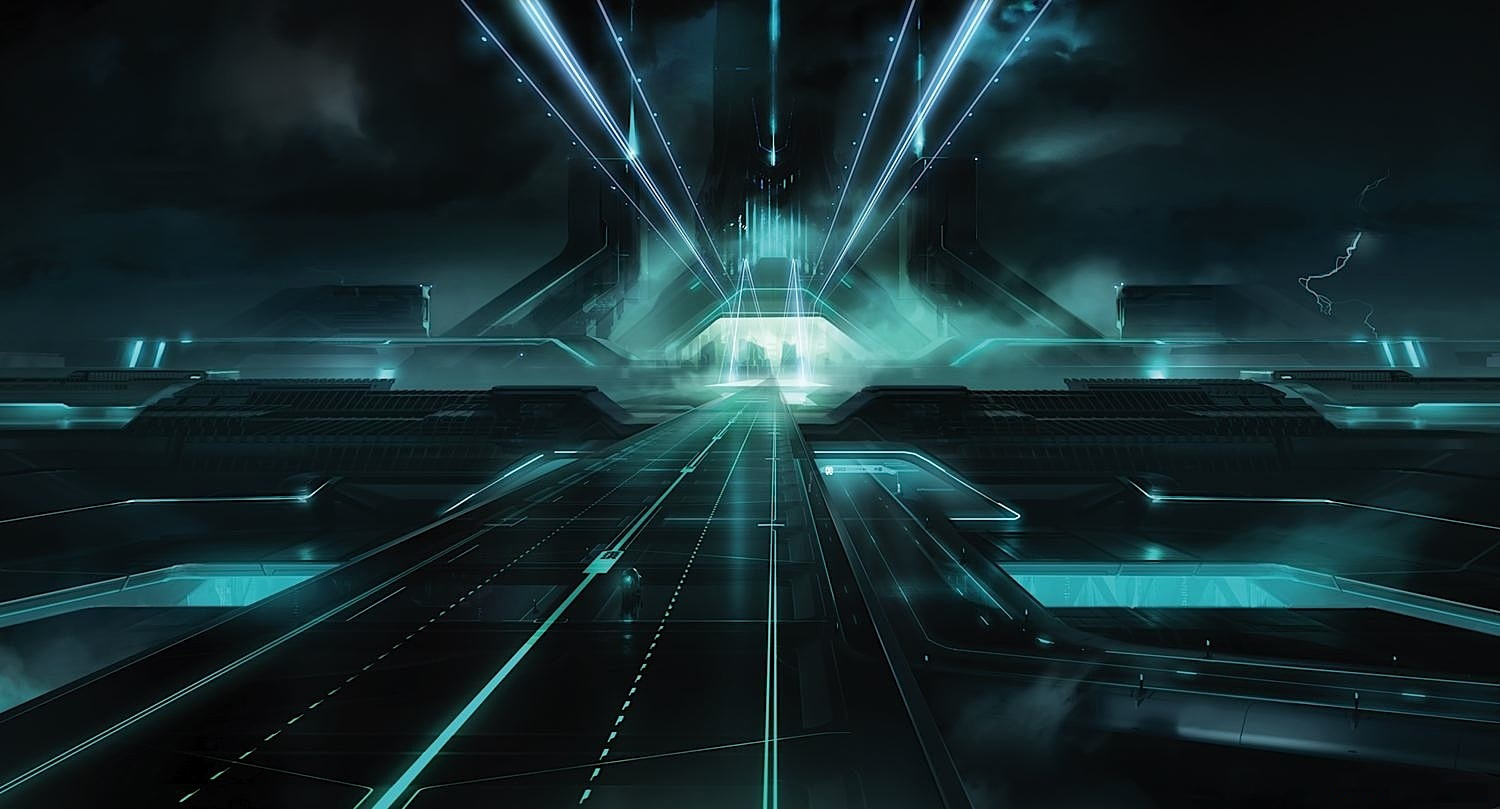
Tron Legacy is a science fiction film directed by Joseph Kosinski. The main characters of this movie are Jeff Bridges as Kevin Flynn and Clu, and Garret Hedlund as Sam (Kevin Flynn's son). Tron is a movie about Sam's journey into a virtual reality world that his father, Kevin Flynn created, called The Grid. After the disaperance of his father, Sam became the biggest share holder of his father's company, ENCOM. However, Sam was not interested in his father's company. One day, Alan Bradley, ENCOM's executive, approached Sam about a mysterious "page" that was sent from his father's computer from an old abandoned arcade. While investigating the arcade, Sam found a secret computer room, where he accidentally sent himself into the virtual reality world created by his father: The Grid.

While watching the movie, I noticed parallels and contrast between Tron city and the city in reality.

Compared to the authorities in the real city, the authorities in Tron city were much stricter. In the beginning of the movie, before Sam teleported himself to Tron city, he violated the law several times, but got away: speeding on the highway and breaking into his father's company. However, when Sam arrived at Tron city, he was viewed as a flaw within the system and was immediately captured. Authorities in Tron city seek out all flaws and imperfections in the city, in order to make it the perfect city, as his father had programmed it to be. Flawed “programs” (humans in Tron city) were either "rectified" or forced to play a game, a battle to the death. Corruption and violation of the laws in Tron city was strictly punished or corrected immediately. In contrast, in the real city, the human system is not as effective in dealing with crimes.

In addition, both cities represent modernization. In the real city, we see modernization from the old brick building of the arcade to the tall, glistering glass skyscraper of ENCOM. In the Grid, the city of Tron is located in a middle of nowhere, surrounded by the barren, rocky terrain. The contrast between the structured and lighted city of Tron to the bare and wild terrain that surrounds the city, emphasizes how modernization of a city creates a boundary between humans and nature. The motor bikes used to travel around Tron city, could not be used in the rocky terrain. Compared to the arcade, the ENCOM building was much more sophisticated and technologically advanced. Similarly, Tron city is a technologically advanced city, but it separates itself from the natural world.Finally, this movie wrestles with the idea of the “perfect” city and the corruption of technology. Technological advances and development has always been seen as beneficial to human needs. However, in Tron Legacy, Kevin Flynn attempted to use technology to create the perfect world for humans to live in. He created Clu, and programmed him to help create the “perfect” world. However, Clu saw human qualities as an imperfection that needed to be destroyed. This shows how technology can be useful and beneficial, but we should not depend on technology to do human responsibilities.


Wednesday, October 12, 2011

Sports as a Symbol of their City


May I introduce to you the St. Louis Cardinals, the greatest baseball team in the MLB and the world.


However, it is not only this stellar team that led me to Busch Stadium in St. Louis, but the skyline that Busch proudly accentuates in the background. It provides a view of the Gateway Arch, the Old Courthouse, and buildings such as Met Life, AT&T and Bank of America that create a spectacular night time skyline visible for everyone to enjoy along with a baseball game. All of this is available for a relatively low price (unless you want a seat close up).


But before you understand the importance of the skyline in connection with the stadium, you must first understand why baseball (and all professional sports) became popular. The reason is pretty simple; the games were cheap and entertaining. As the 1800's came to an end the sprawling new cities created new patterns of recreation and leisure. The congestion and disease of city life led many people to seek participation in outdoor recreation. People sought places within the city to escape the tenements, factories and offices, so they turned to parks where others had set up croquet or tennis clubs.


Working poor could not afford to join a croquet club and did not have as much free time as the affluent, but they too wanted recreation, leisure and fellowship. They found this in gymnastics clubs, amusements parks, and spectator sports such as professional BASEBALL!

People from all social classes (mostly men) attended the games, with ethnic immigrants being among the most faithful fans. Cheering for their baseball and other sports teams, the rich upper class and the downtrodden lower working class found a common loyalty which gave a sense of belonging to uprooted people.

In short, the excitement of rooting for the home team united all fans. So not only were they getting inexpensive entertainment (and most of the time free as you can see in the picture above. Man, can you imagine the World Series being a
free game?), an escape from reality and a passion that they could pursue, but more importantly this all took place in an environment where they were equal to the upper class: their bosses -- the Rockefellers, the Mellons and the Carnegies.


When I went to watch the Cardinals, earlier this year, I noticed that outside the stadium tickets were being sold for a relatively good price that dropped as time went by. As we enjoyed the game, we naturally began socializing with the fans sitting around us and discussed our common interest: the Cardinals, hunting, etc. This was especially interesting when I realized that the the
family sitting behind me was an inner-city family and in front of me sat a family from an upper-middle class suburb. After the game, as I walked through the stadium, I ran into a mass of people from all different social standings, ethnicities, and (probably) financial statuses, the perfect example of
unintended social integration.


I was with my dad, and it was an extremely exciting and entertaining game. The Cardinals were trailing the entire game by two when the home-town hero, Albert Pujols, stepped up to the plate with two outs and drove in two runs to send the game into extra innings. All this entertainment for only $20!


As sports have grown up they have not only kept this connection with all social classes, but have grown even more intimate and essential to the city and the people, serving as symbols of their respective cities. It became quite clear to me the other night when the announcer of the game stated, "The city of St.Louis can sleep sound tonight," after the Cardinals beat the Phillies to tie the NLDS 2-2. This was just a sign that teams such as the Cardinals are not just economically tied into the life of the city, but emotionally and symbolically tied to it. When someone talks about a team, they always use the name of the city, for example: Tampa Bay beat Boston. The pride that people experience from a team winning is akin to nationalism -- people live and die by

their teams. One Chicago Cubs fan goes into this more deeply, "...to me, and to so many others, they [the Cubs] are more because they symbolize something greater: hope, loyalty, endurance, love, pride, tenacity, the strength to carry-on, the ability to keep a dream alive, and my city...
EVERYTHING that I hold near and dear to my heart, that makes me who I am, that signifies all that I believe in...."


In a recent Chrysler commercial (this link will bring you to YouTube) where they flash various symbols of the Detroit, (at 0:48) they show a man wearing the Detroit Tigers baseball shirt. It is just another example of how sports team are symbols of their cities.

Many stadiums are tied in with the city that they represent. The most recognizable symbol of St. Louis, the Gateway Arch, is emblazoned across the outfield (as seen in the picture to the right). In some cities the stadium is an integral part of downtown. I snapped this picture as our plane curved around downtown St. Louis. As you can see, Busch Stadium is a large part of the downtown with the Rams football stadium, the Edward D. Jones Dome, on the other

side. Similar to this, the Staples Center, home of the Laker, Clippers and Kings, is surrounded by downtown Los Angeles right off one of the main streets. These two stadiums, and many like them, became integral parts of their respective downtown landscapes. Their constant association with the city makes the people
feel that the teams represent the city.


One can see all of this (the social classes coming together and a team symbolizing of the city) in the article A Fan's Perspective: What the New York Yankees Mean to Me. He talks about how during 9/11 he felt as if the city rested on the weight of its sports teams. He remembers seeing the "Mayor of America," Rudy Giuliani sitting with the masses and cheering on his favorite team.


The picture of Busch Stadium, at the top of the post, offers more than just a scenic view. It is the perfect symbol of how a team can symbolize a city, can bring together all social classes and can give them all equal entertainment and common ground -- it is a symbol to the fans of all the city has to offer.


------------------------------------------------------------------------------------------


Now here is a cool
progression of the Cardinals' ballparks through the ages


------------------------------------------------------------------------------------------


Robinson Field in 1907 (1893-1920) (an amusement park used to stand right

outside the park)


Sportsman Park in 1920 (1920-1966)


Busch Stadium in 2005 (1966-2005)


New Stadium can be seen at top of the post.


Tuesday, October 11, 2011

Getting Away From the City in the City


Red Bud Isle -- a friendly place welcoming to dogs, dog lovers, fishermen, birds, and anyone seeking a refuge from the city around them. I left my house on Saturday morning (earlier than I am usually awake), got out of the car and walked into a place that, at first, seems just like any other park, except for the dogs running free. This is a place that is 5 minutes from my house in the middle of Austin; a place I pass every day, twice a day, that is purely natural, that I knew existed, but never bothered to visit.

As you walk around the perimeter and get deeper into the park you’ll be swarmed with different sounds ranging from pedestrians with their dogs, birds of every type, a dog splashing around in the river, fish popping to the surface to snatch some breakfast, and a squirrel barking its peculiar squirrel bark on a tree branch. Man-made sights that surround the park such as the river bluff houses, the bridge, and the dam are mostly hidden by the towering cypress trees. but had never taken the time to explore. Early in the morning you can find many different people bringing their dogs to enjoy an area where the dogs are allowed to run free. Walking into the park, you are met by the sights and sounds of dogs playing and chasing squirrels as people stand around having friendly chats with strangers.

While all of this is happening there is the buzz of cars passing by on the low-water bridge, an airplane passing overhead, and when the gates are up you can hear the roar of the dam. Over the tree tops stretches a radio tower and the LCRA dam. But all these sights and sounds are in their own way soothing. Listening to the cars pass over the bridge while you fish becomes calming as they each have a similar rhythm. There is always a slight hint that you are still in the city, however in this environment it is nature that drowns out the sounds of the city.


Red Bud Isle attracts people from all over Austin who want a quick escape. Most are Caucasian or Hispanic who come from as far west as Barton Creek, north from the UT campus and all the way from downtown Austin wearing clothes ranging from casualwear to sportswear.


When these people were asked what they think about the park, the answer was simple, “It’s great, you know, more of a forested area that is just right in the middle of town. You can drive your car just a couple of miles and you’re here.” The fisherman, I see almost every morning on my way to school, responded, “…it’s one of the

few spots I really like on Town Lake. It’s peaceful. It’s a nice little meditating spot. It’s a really green part of the city. Mornings like this are really pretty. It’s just a nice place to come down from the city and just relax.” What place seems more peaceful and serene than a lush green island surrounded by the calm Colorado River.

When I went up to one of these groups of dog owners to ask what they thought about having the dog park so centralized one, as if speaking for the group, told me, “ it’s perfect…” It offers not only this great atmosphere, but also many amazing views and opportunities for recreation such as fishing, canoeing, jogging, or just enjoying some fresh air, all free and easily accessible. But the main reason people go to Red Bud Isle is for their canine buddies. There is something that takes over on this island and immediately all the dogs become friends with each other. When a new dog comes to visit then all the others dogs run over, two sniffs, and the new dog is invited to play tag with the others. While the dogs run around with each other playing and splashing around in the waters of the Colorado, the owners begin to socialize with each other.

The deeper we got into the park,
leaving the dogs behind, we realized it was not just a park for dogs. By the end we didn’t even notice the dogs when we came to the end point that provided a perfect view of Town Lake with a couple canoers, a fisherman on a boat, the twisting roots of a cypress tree, and the water shimmering like glass. The only things you could hear were the birds, faint snatches of conversation from the canoers, and the sounds of the river.

All this combined creates a refuge for residents, dogs and nature to commune, right in the heart of the city.