Saturday, September 24, 2011

Home Town

On Adele's official blog site, she quotes " ‘Hometown Glory’ – a stunningly evocative picture of “all my fondest memories of London”." She wrote the song "Hometown Glory in about 10 minutes after her mother tried to get her to leave London for a "university." Adele had been born and raised in London to a single teenage mother, and started singing at the age of four. At age 11, she and her mother moved to West Norwood (south London) which is the setting for the song "Hometown Glory."


Although we have seen that the city can have hidden secrets of poverty, I see Adele portray the city in a positive view, where dreams are discovered and memories are made. In her first stanza, she mentions that she is "aint lost, just wandering" means to say that she does not follow the stereo type of walking the same path everyday to work and fitting inside of her status in society. People my judge her and ask if she needs help finding her way back, as we see when she says, "is there anything i can do for you dear? is there anyone I can call?" Adele is not lost, she is striving to become something great and is seeing what is like to live the life of someone who is successful in the city.
After seeing the "wonders of [her] world" it fascinates Adele to see all of the different kinds of people in the city because "two worlds collide". Adele sates that even though "you get the people and the government [where] everybody [is] taking different sides" at the end of the day, the city is united. She is proud of where she is from.

I've been walking in the same way as I did
And missing out the cracks in the pavement
And tutting my heel and strutting my feet
"Is there anything I can do for you dear? Is there anyone I could call?
No, and thank you, please madam, I ain't lost, just wandering"

Round my hometown, memories are fresh
Round my hometown, ooh, the people I've met

Are the wonders of my world, are the wonders of my world
Are the wonders of this world, are the wonders and now

I like it in the city when the air is so thick and opaque
I love it to see everybody in short skirts, shorts and shades
I like it in the city when two worlds collide
You get the people and the government
Everybody taking different sides

Shows that we ain't gonna stand shit
Shows that we are united
Shows that we ain't gonna take it
Shows that we ain't gonna stand shit
Shows that we are united

Round my hometown, memories are fresh
Round my hometown, ooh, the people I've met

Are the wonders of my world, are the wonders of my world
Ar
e the wonders of this world, are the wonders of my world
Of my world, yeah, of my world, of my world, yeah


[- From :http://www.elyrics.net/read/a/adele-lyrics/hometown-glory-lyrics.html -]
http://www.adele.tv/biography/

http://en.wikipedia.org/wiki/Adele_%28singer%29#2006.E2.80.9308:_Career_beginnings

Monday, September 12, 2011

The Children of Migrant Workers in Beijing

Beijing, a global city with almost 20 millions of residents, is one of the most populous cities in the world. It is the heart of China's politic, culture, and military; more significantly, it serves as the nation's educational center. As the home of more than eighty universities, Beijing attracts the interests of elite teachers and students all over the country.

Unfortunately, such wonderful educational resources could never be shared by one group of the Chinese citizens----the children of the poor migrant workers in Beijing. To limit the population in Beijing, the Government enforced an amendment, which restricts migrant children from attending public schools. Richer migrant families would get around this problem by either bribing school officials or paying the overcharged price of going to private schools. In contrast, the majority of the migrant workers' children would end up going to schools that were specifically opened for them. Most of these schools are in terrible condition and could only afford to hire teachers without qualified certification.

This summer, a couple St. Stephen's students and I had the opportunity to organize an English program for these migrant children in Beijing. Here is a reflection I've concluded at the end of our camp:

Our goal was to teach these kids some simple English, Math, and organize some fun activities for them in order to lighten up their summer. We thought that they would not be so keen on coming to school every morning during the summer and learn about a language that was rather strange to them. Yet, they responded with much enthusiasm and promised to tell their friends to show up as well. (272)
The classroom was filled with trash, dirty wallpapers, and had the smell of rotten pickles, yet, the students were so unbelievably focused. Even though they were not very fast learners and sometimes had difficulties of understanding our objectives, they never gave up and always came back the next day with even more enthusiasm. In the end, we decided to extend our days at the school as the children had really inspired us. Yet, their condition still worried us as the principals for these kind of migrant children's school often took away the government fund, which often resulted in the closure of schools.


Since schools specially opened for migrant workers' children only go as far to 9th grade, most students would not have the chance to go on with their education. As a result, they are forced to enter the society at an early age, and their criminal rates are far higher than those of the children from richer families. This scenario reminded me of a passage in "Maggie, a Girl of the Streets,"----- "when Jimmie was a little boy, he began to be arrested. Before he reached a great age, he had a fair record" (Crane 18). Similar to Jimmie, who had been raised in the New York tenement, migrant workers' children in China also live in slum-like households and are more vulnerable to the Urban life's evil deeds.

Re: Invisible Cities


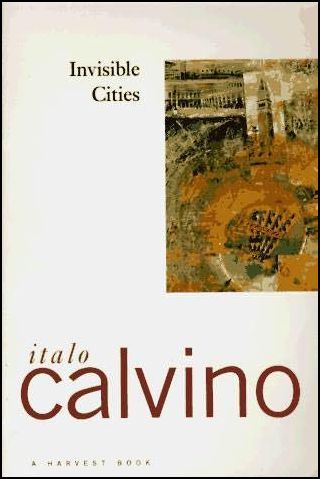
One of the book being read by the class is Invisible Cities by an Italian writer, Italo Calvino. The style of the writing is very beautiful and poetic of these fantastical cities which inspire much awe and wonder in the narrator. As he says in his book "When Polo began to talk about how life must be in those places... words failed him". I was very moved by these descriptions, and so I wish to attempt to create my own city in the same style of writing. I recommend reading the book to anyone who has an active imagination with an analytical eye, and please feel free to give feedback on my interpretation of the writing. Readings from the book are available here.


Cities and Desire


Along the coast there is there is the city of Jerdeania, a place you would not believe was real until you saw the two islands that seem to have just rose out of the ocean. The city may have been build many years ago, but the ocean has since destroyed the land it had been built on. From these great uplifts of land you see buildings built on cliffs held together by the metal pipes, as metal roots for the growing building keeping the city stable. The city seems to have been growing up for years now. The two sides of the city are similar, so obviously started by the same people, yet they are separated by this great canyon nature has created between them. The city to the north seems to be populated by the most beautiful and desirable women in the world that seem content living their lives within the isolation that the island provides. The island more to the south is inhabited by men who seem pleased to be going about their daily tasks absent of the diverse humanity waiting in the outside world. These men and women are separated by the waves of the violent ocean swirling under the foundation which they live on and by, seemingly ignorant to anything not on the cliff city.
As the tide lowers with the sun, there is a sense of restlessness that develops within the citizens of Jerdeania, and almost by magic the eyes of a man and woman lock across the great canyon that separates them. There is an animistic instinct that breaks through and the couple knows to that the new calm waters are the conditions of the transaction that is between them. Before their minds can catch up, their bodies are naked and falling down to the salty foam that welcomes them. This spreads through the city like a disease until all the buildings are abandoned with piles of useless clothing to the blissful populous now playing gayly in the water naturally with genders different from their own. The beautiful nudity seems a new experience for the citizens and enjoy the compatibility that they have now discovered with the sun disappearing into the water. Yet with the green flash of the vanished sun, the passion is gone, the mind takes over once again and the naked bodies must separate and climb up the cliffs from which they had fallen and contentment returns to the citizens of Jerdeania. As the ocean becomes once again relentless, the people must once again separate, until the next calming of the waters. A city built against nature must become one with it.