"What'd you do last night?"
"We did umm, two whole cars
It was me, Dez, and Main Three right?
And on the first car in small letters it said
'All you see is..' and then you know
Big, big, you know some block silver letters
That said '..crime in the city' right?"
"It just took up the whole car?"
"Yeah yeah, it was a whole car and shit..."
Black Star's "Respiration" opens with a sample from the graffiti documentary, "Style Wars." In the excerpted dialogue, the graffiti artist Skeme discusses his famous piece "Crime in the City" (pictured above). With train mural he makes a simple argument about how the wider public viewed the graffiti subculture in the 1970s and 80s: as a crime (See Nathan Glazer). The piece, though, reflects this simplistic and stereotyped view back on it self: "all you see is CRIME IN THE CITY," calling out those who would diminish the art. The irony is, of course, that what the viewer is looking at when they see the graffiti mural is an aesthetic and political statement. The implication in Skeme's piece is that there is much more to graffiti and perhaps to everyday life in the inner-city at large than meets the eye. In a sense, more than anyone graffiti writers--and the called themselves "writers," lived and breathed with the rhythms of the cities: the movement of trains, police patrols, and the larger life and death of the city's various neighborhoods.
Skeme's "Crime in the City"
There is a quality even meaner than outright ugliness or disorder, and this meaner quality is the dishonest mask of pretended order, achieved by ignoring or suppressing the real order that is struggling to exist and to be served.
- Jane Jacobs, The Death and Life of Great American Cities
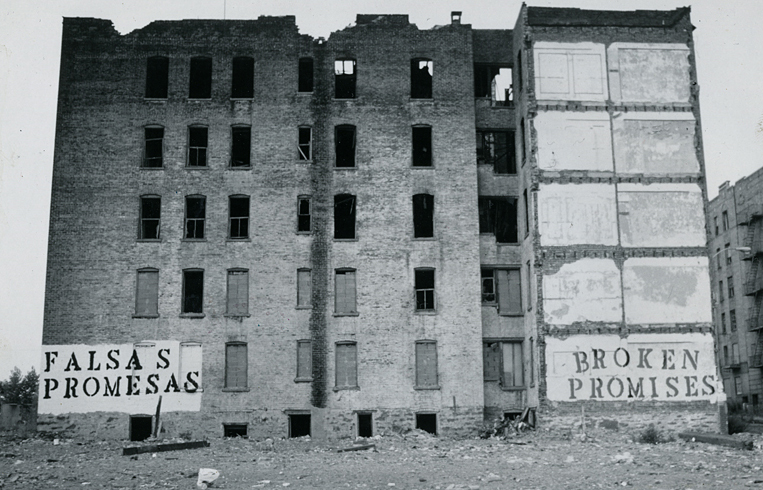
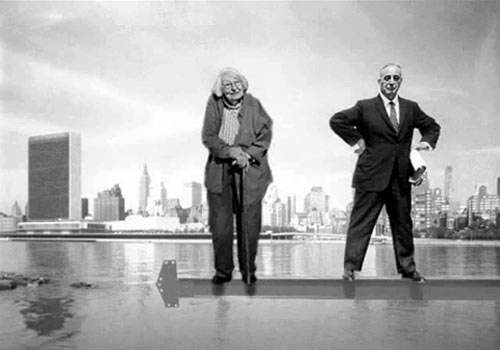
Graffiti, as part of hip hop culture more broadly, was born in the South Bronx in the years following New York City's redevelopment of the so-called slum with a large scale urban "renewal" project: the Cross-Bronx Expressway. The building of the Expressway set up one of the most famous controversies over urban space in American history: community activist Jane Jacobs's grassroots movement to stop a similar expressway proposed for Lower Manhattan, also designed by the architect of the Cross-Bronx Expressway, the much-vilified urban planner, Robert Moses. While Jacobs won that battle of the sidewalk versus the highway, in the South Bronx, people were displaced and neighborhoods were left in ruins. Graffiti art emerged as a response to the decay the city had wrought--not as a cause of it--a way of beautifying the forgotten city spaces and speaking truth to power by reminding the public of the inhabitants of these abandoned neighborhoods. This is all to say that rap music, like graffiti, is so intimately connected with the life of the city that they seem to breath as one, a point that Mos Def, Talib Kewli, and Common emphasize in the underlying metaphor of their song "Respiration."
Urban decay in the South Bronx, 1980
Jane Jacobs and Robert Moses
So much on my mind that I can't recline
Blastin holes in the night til she bled sunshine
Breathe in, inhale vapors from bright stars that shine
Breathe out, weed smoke retrace the skyline
Heard the bass ride out like an ancient mating call
I can't take it y'all, I can feel the city breathin
Chest heavin, against the flesh of the evening
Sigh before we die like the last train leaving
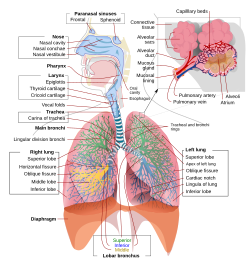
The trope of breath underlies the title of "Respiration" and much of the lyrics in both the verses and chorus. Like great romantic poetry in which lovers share breath, the rappers emphasize their intimacy with the city with the respiratory analogies. In the chorus, the city is figured as a body, breathing in and out, inhaling both star shine and pot smoke, all things in the urban environment. But the rappers are breathing in and out with the city. For one, they are documenting the daily life of the metropolis and thus breathing along with it's various rhythms. Given that certain outsiders don't look closely at the inner city and inner-city people, often viewing them, as Skeme suggests, as criminals, the urban stories of hip hop are vital stories to be told about the life of the city. The best of both graffiti "bombing" and sound bombing worked for the same goal: to make visible a population--largely black and hispanic--that had been overlooked and neglected by society. But it's not a pretty site. It's clear from the lyrics that the city is not well, according to Black Star and Common. Particularly in Def's verse, corruption and suffering seem to run rampant.
The respiratory system
The subway system (NYC)
Gotham's been good to our family, but the city's been suffering. People less fortunate than us have been enduring very hard times. So we built a new, cheap, public transportation system to unite the city. And at the center... Wayne Tower.
- Thomas Wayne to a young Bruce Wayne , Batman Begins
Public transit, as part of the respiratory system of the city, is central in the verses of "Respiration." Talib Kweli raps in the second verse, "I take the L, transfer to the 2, head to the gates / New York life type trife the Roman Empire state." In his closing verse, Common raps, "So some days I take the bus home, just to touch home." Though his success as a rapper might allow him to take more elite methods of transportation--the blinged out cars most rappers spend their breath rapping about--he takes the bus to stay "in touch," literally and metaphorically, with the city. It is a choice that fits his name, Common, as in down with the "common" folk, the working class, the poor, who he of course brushes shoulders with as he rides the bus. The bus also moves at a slow pace through city streets, keeping one's perspective focused on the minute details ever every block. For big cities, the public transit system is the life of the city--this is no doubt why Bruce Wayne's father built one for the people of Gotham in Batman Begins. Without one, a city can die: people don't travel downtown, or just travel in and out by car on a raised highway like the Cross-Bronx Expressway. But Black Star's Gotham is a city with "No Batman and Robin," no superheroes to save the day.
A hooded Mos Def
Kweli chilling on the stoop
Def outlines a number of different issues that inner-city America faces in the 1990s, mostly focusing, though, on the corruption of the rich and suffering of the poor suffer: cheating Wall Street businessmen make all the money while the working class struggles to make a living. He describes stock brokers as "mercenaries,"and further reverses the usual association between the city and civilization, mocking New York as the financial capital of the world, "Spotlight to savages, NASDAQ averages." Meanwhile, "Hard knuckles to second hands of working class watches." The line contains images of labor (hard, hands and watches) and poverty (second hands), but also hints at the eventual corruption of the destitute (hard knuckles can rob watches). Many in the city turn to crime out of desperation and thus you "can't tell between the cops and the robbers." This thin line between legitimate business practices and the crimes of the underground economy is a theme that Killer Mike more recently touches on in his "American Dream." As with the Skeme mural, there is more to the inner city than the criminality that most see.
My narrative, rose to explain this existence
Amidst the harbor lights which remain in the distance
A user on rapgenius.com named Questo suggests that there is a The Great Gatsby reference in the final line of Mos Def's verse. The suggestion is that the "harbor lights" of the song refer to the famous green light on Daisy's dock that Gatsby stares out at in the beginning of the novel and Nick returns to at the end. Anyone who has studied this book in high school has been forced to analyze this symbol, but it usually comes out to something like "the green light represents Gatsby's desire for Daisy and her seemingly effortless old wealth, which is a version of the American dream." In the context of the contemporary inner city, "Respiration" does comment on how the ideal of the American dream is not alive for many impoverished blacks and Hispanics--a cross cultural connection emphasized in the repeated Spanish sample used on "Respiration." This idea of a dream deferred or somehow tarnished is evoked by Mos Def's biblical reimagining of the "The Big Apple": "The shiny apple is bruised but sweet and if you choose to eat / You could lose your teeth, many crews retreat." ...
Screenshot of the protagonist in The Roots' "undun"
A new album from The Roots will drop December 6th that is relevant to our course. It's called "undun" and tells the story of a young inner city youth who makes a decision that "undoes" his entire life. There is a single released for the album and a few videos online. Here is how the album is described on the rap band's website:
"undun is an existential re-telling of the short life of one Redford Stephens (1974-1999). Through the use of emotives and Redford's internal dialogues the album seeks to illustrate the intersection of free will and prescribed destiny as it plays out 'on the corner'. Utilizing a reverse narrative arc, the album begins as the listener finds Redford disoriented--postmortem--and attempting to make sense of his former life. As he moves through its pivotal moments he begins to deconstruct all that has led to his (and our own) coming undun."
The idea of "the intersection of free will and prescribed destiny as it plays out 'on the corner'" clearly relates to our own discussion of environmental determinism beginning with Jacob Riis's How the Other Half Lives, but strikes an interesting balance between individual responsibility and social failure. Here's how the band further describes the story of Redford:
"undun is the story of this kid who becomes criminal, but he wasn't born criminal… he's actually thoughtful and is neither victim nor hero. Just some kid who begins to order his world in a way that makes the most sense to him at a given moment... At the end of the day... isn't that what we all do?"
"undun" album cover
Since the album is not out yet, there's not much to go on. But I love the cover. It reminds me of our discussions of Riis and Vergara, and how despite the lack of basic services provided to inner-city communities by municipal governments, the urban poor nonetheless often transform their own neighborhoods, like the boys here making a playground out of these abandoned mattresses.
One of the songs that has been released with an accompanying video is called "Make My." The title clearly references the famous line from Dirty Harry spoken by Clint Eastwood's vigilante protagonist to a partially wounded black bank robber who is contemplating reaching for his gun. The song though clearly recontextualizes this classic showdown.
"Making my day" has a different meaning for the protagonist of "undun." He is clearly struggling to survive below the poverty line and wondering how he will be able to survive:
"They told me that the ends would justify the means
they told me at the end, it would justify the dreams
That I’ve had since a child, maybe I’ll throw in the towel
And make my, make my, make my, make my
Departure from the world"
I'm not posting the "Make My" video teaser one line, though you can find it here. (It does interestingly revise the classic showdown scene as an instance of a young black man killing another young black man.) Instead, I'll close by sharing the video for the track "tip the scale," which references the scales of justice that seem tipped against inner city minority youth:
Efficiency in general describes the extent to which time or
effort is well used for the intended task or purpose. It is often used
with the specific purpose of relaying the capability of a specific
application of effort to produce a specific outcome effectively with a
minimum amount or quantity of waste, expense, or unnecessary effort.
In the late 1800's, Frederick Winslow Taylor developed methods of labor productivity, one of many types of efficiency, called Taylorism. Taylorism was largely accepted by industries seeking to increase profits and reduce waste. Despite looking good initially, this "efficiency" also met a lot of criticism. In the early 1900's the Senate in fact banned Taylor's methods when an investigation found the majority of workers to be hostile towards the amount of control the managers had over them. Similarly, in Taylorism, workers with talent and potential were treated the same as unskilled workers creating a system that catered to drones, not humans. I find this historical context helpful because it is an example of how "efficiency" does not often work well with human nature.
In Blade Runner, Ridley Scott shows us a world full of "efficiency". Technology has advanced far enough to enable street vendors to do DNA tests on synthetically manufactured snake scales and housing shortages are clearly no longer an issue. However despite such advances there are clearly major problems still plaguing the city and in fact the majority of people have fled off-world. In the world of Blade Runner, replicants have been created for the purpose of colonizing other planets. Such a feat by genetic designers, creating robots that are superior to the creators themselves, would be looked at by our society today as amazing and extremely beneficial. However, as seen by the goal of the Blade Runners which is to "retire" the replicants, these technological advances have gotten too far out of hand and the efficient city which we had been working towards for hundreds of years is no longer efficient for humans.