Showing posts with label Crime. Show all posts

Monday, July 30, 2012

Breathing with the City with Black Star (featuring Common)


"What'd you do last night?"
"We did umm, two whole cars
It was me, Dez, and Main Three right?
And on the first car in small letters it said
'All you see is..' and then you know
Big, big, you know some block silver letters
That said '..crime in the city' right?"
"It just took up the whole car?"
"Yeah yeah, it was a whole car and shit..."
Black Star's "Respiration" opens with a sample from the graffiti documentary, "Style Wars." In the excerpted dialogue, the graffiti artist Skeme discusses his famous piece "Crime in the City" (pictured above). With train mural he makes a simple argument about how the wider public viewed the graffiti subculture in the 1970s and 80s: as a crime (See Nathan Glazer). The piece, though, reflects this simplistic and stereotyped view back on it self: "all you see is CRIME IN THE CITY," calling out those who would diminish the art. The irony is, of course, that what the viewer is looking at when they see the graffiti mural is an aesthetic and political statement. The implication in Skeme's piece is that there is much more to graffiti and perhaps to everyday life in the inner-city at large than meets the eye. In a sense, more than anyone graffiti writers--and the called themselves "writers," lived and breathed with the rhythms of the cities: the movement of trains, police patrols, and the larger life and death of the city's various neighborhoods.


Skeme's "Crime in the City"


There is a quality even meaner than outright ugliness or disorder, and this meaner quality is the dishonest mask of pretended order, achieved by ignoring or suppressing the real order that is struggling to exist and to be served.
- Jane Jacobs, The Death and Life of Great American Cities
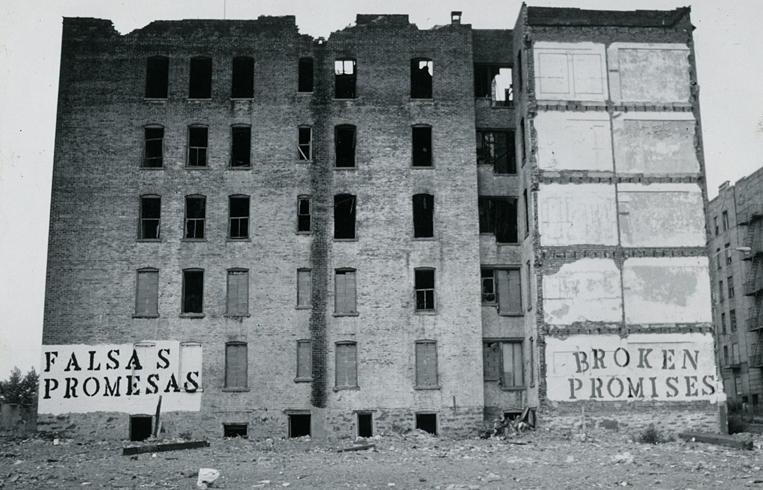
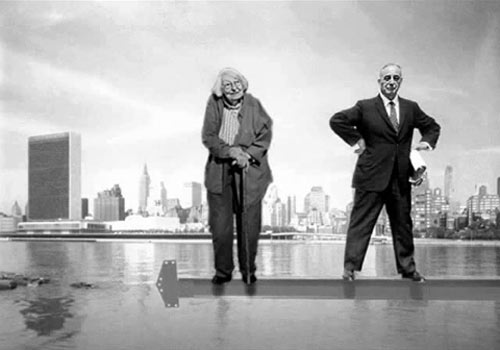
Graffiti, as part of hip hop culture more broadly, was born in the South Bronx in the years following New York City's redevelopment of the so-called slum with a large scale urban "renewal" project: the Cross-Bronx Expressway. The building of the Expressway set up one of the most famous controversies over urban space in American history: community activist Jane Jacobs's grassroots movement to stop a similar expressway proposed for Lower Manhattan, also designed by the architect of the Cross-Bronx Expressway, the much-vilified urban planner, Robert Moses. While Jacobs won that battle of the sidewalk versus the highway, in the South Bronx, people were displaced and neighborhoods were left in ruins. Graffiti art emerged as a response to the decay the city had wrought--not as a cause of it--a way of beautifying the forgotten city spaces and speaking truth to power by reminding the public of the inhabitants of these abandoned neighborhoods. This is all to say that rap music, like graffiti, is so intimately connected with the life of the city that they seem to breath as one, a point that Mos Def, Talib Kewli, and Common emphasize in the underlying metaphor of their song "Respiration."

Urban decay in the South Bronx, 1980

Jane Jacobs and Robert Moses
So much on my mind that I can't recline
Blastin holes in the night til she bled sunshine
Breathe in, inhale vapors from bright stars that shine
Breathe out, weed smoke retrace the skyline
Heard the bass ride out like an ancient mating call
I can't take it y'all, I can feel the city breathin
Chest heavin, against the flesh of the evening
Sigh before we die like the last train leaving
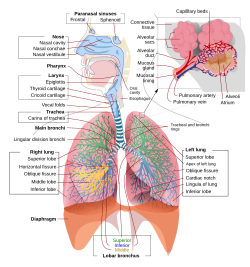
The trope of breath underlies the title of "Respiration" and much of the lyrics in both the verses and chorus. Like great romantic poetry in which lovers share breath, the rappers emphasize their intimacy with the city with the respiratory analogies. In the chorus, the city is figured as a body, breathing in and out, inhaling both star shine and pot smoke, all things in the urban environment. But the rappers are breathing in and out with the city. For one, they are documenting the daily life of the metropolis and thus breathing along with it's various rhythms. Given that certain outsiders don't look closely at the inner city and inner-city people, often viewing them, as Skeme suggests, as criminals, the urban stories of hip hop are vital stories to be told about the life of the city. The best of both graffiti "bombing" and sound bombing worked for the same goal: to make visible a population--largely black and hispanic--that had been overlooked and neglected by society. But it's not a pretty site. It's clear from the lyrics that the city is not well, according to Black Star and Common. Particularly in Def's verse, corruption and suffering seem to run rampant.


The respiratory system
The subway system (NYC)

Gotham's been good to our family, but the city's been suffering. People less fortunate than us have been enduring very hard times. So we built a new, cheap, public transportation system to unite the city. And at the center... Wayne Tower. 
- Thomas Wayne to a young Bruce Wayne , Batman Begins
Public transit, as part of the respiratory system of the city, is central in the verses of "Respiration." Talib Kweli raps in the second verse, "I take the L, transfer to the 2, head to the gates / New York life type trife the Roman Empire state." In his closing verse, Common raps, "So some days I take the bus home, just to touch home." Though his success as a rapper might allow him to take more elite methods of transportation--the blinged out cars most rappers spend their breath rapping about--he takes the bus to stay "in touch," literally and metaphorically, with the city. It is a choice that fits his name, Common, as in down with the "common" folk, the working class, the poor, who he of course brushes shoulders with as he rides the bus. The bus also moves at a slow pace through city streets, keeping one's perspective focused on the minute details ever every block. For big cities, the public transit system is the life of the city--this is no doubt why Bruce Wayne's father built one for the people of Gotham in Batman Begins. Without one, a city can die: people don't travel downtown, or just travel in and out by car on a raised highway like the Cross-Bronx Expressway. But Black Star's Gotham is a city with "No Batman and  Robin," no superheroes to save the day.

A hooded Mos Def

Kweli chilling on the stoop
Def outlines a number of different issues that inner-city America faces in the 1990s, mostly focusing, though, on the corruption of the rich and suffering of the poor suffer: cheating Wall Street businessmen make all the money while the working class struggles to make a living. He describes stock brokers as "mercenaries,"and further reverses the usual association between the city and civilization, mocking New York as the financial capital of the world, "Spotlight to savages, NASDAQ averages." Meanwhile, "Hard knuckles to second hands of working class watches." The line contains images of labor (hard, hands and watches) and poverty (second hands), but also hints at the eventual corruption of the destitute (hard knuckles can rob watches). Many in the city turn to crime out of desperation and thus you "can't tell between the cops and the robbers." This thin line between legitimate business practices and the crimes of the underground economy is a theme that Killer Mike more recently touches on in his "American Dream." As with the Skeme mural, there is more to the inner city than the criminality that most see.


My narrative, rose to explain this existence
Amidst the harbor lights which remain in the distance
A user on rapgenius.com named Questo suggests that there is a The Great Gatsby reference in the final line of Mos Def's verse. The suggestion is that the "harbor lights" of the song refer to the famous green light on Daisy's dock that Gatsby stares out at in the beginning of the novel and Nick returns to at the end. Anyone who has studied this book in high school has been forced to analyze this symbol, but it usually comes out to something like "the green light represents Gatsby's desire for Daisy and her seemingly effortless old wealth, which is a version of the American dream." In the context of the contemporary inner city, "Respiration" does comment on how the ideal of the American dream is not alive for many impoverished blacks and Hispanics--a cross cultural connection emphasized in the repeated Spanish sample used on "Respiration." This idea of a dream deferred or somehow tarnished is evoked by Mos Def's biblical reimagining of the "The Big Apple": "The shiny apple is bruised but sweet and if you choose to eat / You could lose your teeth, many crews retreat." ...


Wednesday, November 2, 2011

The Suburbs


The TV show Weeds, created Jenji Kohan, critiques and compares inner city and suburban life in America. Nancy Botwin (Mary-Louise Parker) plays a white, middle aged, widowed mother who begins to sell marijuana in order to maintain her wealthy suburban lifestyle after the death of her husband. Nancy lives in a wealthy suburb called Agrestic in California. Agrestic is a symbol of a perfect, wealthy, white, American suburb. In every episode, Kohan critiques this "perfect" white suburban lifestyle with the theme song "Little Boxes" written by Malvina Reynolds.


"Little Boxes"
Little boxes on the hillside,
Little boxes made of ticky tacky,1
Little boxes on the hillside,
Little boxes all the same.
There's a green one and a pink one
And a blue one and a yellow one,
And they're all made out of ticky tacky
And they all look just the same.

And the people in the houses
All went to the university,
Where they were put in boxes
And they came out all the same,
And there's doctors and lawyers,
And business executives,
And they're all made out of ticky tacky
And they all look just the same.

And they all play on the golf course
And drink their martinis dry,
And they all have pretty children
And the children go to school,
And the children go to summer camp
And then to the university,
Where they are put in boxes
And they come out all the same.

And the boys go into business
And marry and raise a family
In boxes made of ticky tacky
they look just the same.
There's a green one and a pink one
And a blue one and a yellow one,
And they're all made out of ticky tacky
And they all look just the same.


"Little Boxes" portraits white suburban life as dull. Everyone goes to the same university, everyone gets the same job and goes to the same coffee shop before work. Reynolds argues that this wealthy white American dream causes people to conform to what society believes is the correct way to live and raise a family. However, it really just makes everyone into the same boring person.
Nancy breaks the mold. Although, she still wants to enjoy her life in suburbia. She doesn't have a really job or money to support her family, so she resorts to selling weed. This brings up an interesting contrast. For many wealthy white families, the attraction of the suburbs is to avoid the violence, drugs, and conflict of the inner city. However when Nancy decides to start selling weed, she brings these inner city problems to Agrestic. For instance, at the end of season 3, Nancy buys protection from Guillermo, another drug dealer from the city. As a result, Guillermo begins a "war" between rival drug dealers to protect Nancy's business in Agrestic. However, when Guillermo burns down a local weed farm, it causes Agrestic to catch fire and burn to the ground.
Weeds also illustrates the racial tension between white suburbians and Nancy's black drug dealing partners. In an episode in Season 3, Nancy buys a grow house in Agrestic, and her black friend and partner Conrad moves in. When Conrad's sister and mother go on a walk in the neighborhood, they meet a jogger, who waves and smiles, then runs to the other side of the street to continue jogging. This jogger shows the tension between races that can still make some people uncomfortable. Suburbia has high taxes and is for high income families. As a result, wealthy white families are usually the ones who move to the suburbs. So when this jogger sees Conrad's black mother and sister, she becomes uncomfortable because they just seem out of place.

Sunday, October 9, 2011

Wooldridge Square

Google Maps View of Wooldridge Square


Wooldridge Square

By: Noah Stewart and Michael Greeson


Project Chopped and Screwed in GarageBand


"The Truth Enforcement"


Real APD Squad Vehicle


Wooldridge Square

At the intersection of 10th and Guadalupe Street, there lay a 1 square block patch of dried grass, which goes by the name of Wooldridge Square. Although devoid of any nature after a record-breaking drought, this park remains alive in terms of human interaction. Here we found various subcultures of Austin clashing, and co-existing as they used urban space provided by the City of Austin as they pleased.

An off-white gazebo sits in this small valley of the square. Although the gazebo appears to tower over the homeless citizens who seek its shelter, it is dwarfed by the surrounding government buildings. Even from the lowest point in the park, the capitol building is visible, looming over the top of every building in between. The urban space is host to irony, as the government officials in the buildings surrounding the park observe the impoverished inhabitants of the park without aiding them in any manner. The park also represents the eternal struggle between rebellion and authority given its location between the Travis County Constable Office, the Travis County Jail, and the Justice of Peace.

Upon scanning the various corners of the intersection, we found a group of skateboarders. We approached them in order to inquire about their use of urban space. (View their location here.) The skaters happily showed us their different tricks, all utilizing the set of stairs in a different way. After observing, recording sound, and shooting video for a few minutes, a policeman arrived to enforce the law upon the urban rebels. We observed from a distance with a small portion of the group as the cop lectured the other skateboarders and apparently told them to leave. Both of us approached the policeman for an interview after he sent the skateboarders away but were turned down after being told that granting us an interview would oppose department policy. This clash between authority and rebellion was again exemplified in a different corner of Wooldridge Square.

Just a short walk away from the corner where the skaters were, we saw what we believed to be a police car a first glance. But upon inspection we realized that this car was not a police car at all, but “The Truth Enforcement.” The car was the exact same make and model as the vast majority of squad cars in the area, but instead of enforcing the law, this vehicle preached marijuana reform. The driver of this vehicle is using the urban space to protest solely by parking the car there. When he is around the vehicle, he is using the space to actively spread the word and hand out pamphlets.

After only an hour of observation at Wooldridge Square, we found that urban space is used for much more than the designer intended. Observing a landscape is just like reading a book in the sense that one must pay attention to each detail and read further in depth than what meets the eye.


Wednesday, October 5, 2011

Compton's Influence in Music

2010_02_<span class=
(Caution: Profanity flows freely due to the subject matter discussed in this post)

As rap music was growing on the east coast in major cities like New York, it hadn't quite spread to the west coast. However, eventually, rap spread to the west coast. Compton, California is located just south of Los Angeles. Compton was infamous for its gang related crime including shoot outs, murders, and narcotics. The city of Compton became a major influence of Gangstar Rap(aka Gangsta Rap) in the shaping of rap history. Gangsta rappers rapped about their experiences in Compton, selling drugs and running with the gangs (the Bloods and the Crips). By the 90's, Compton was recognized as the center of West Coast and Gangster Rap, producing rappers like Ice-Cube, Dr. Dre, Easy E, Tupac and Snoop Dog. Many new record companies also sprouted up in Compton. Including Total Trak Productions (TTP), named after the gang Tree Top Pirus located in Compton and Death Row Records run by Marion Suge Knight, a well known gang leader. Easy E also started a record label in Compton which he claimed was funded by his selling of cocaine and other narcotics in Compton.

Map of Compton, CA

N.W.A was one of the most famous rap groups that originated from Compton. In fact, N.W.A pioneered Gangsta Rap on the West Coast. N.W.A rapped about their tough upbringing in Compton. In their album Straight Outta Compton, N.W.A wrote some very controversial songs such as "Fuck tha Police."
N.W.A said that they rapped about reality. In song "Fuck tha Police," N.W.A treats the song as if it is court hearing in which different artists from the group "testify" against police brutality and racial prejudices. For instance, when Ice-Cube raps "Fuck the police/Comin straight from the underground./Young nigga got it bad cuz I'm brown/And not the other color so the police think/They have the authority to kill a minority...With a little bit of gold and a pager/Searching my car, looking for the product/Thinking every nigga is selling narcotics" Here, Ice-Cube questions the ethics of the police force in Compton and the prejudices that they might have towards black men as all being criminals. Since he has "gold and a pager" the police automatically believe that he is selling drugs, they don't believe that he can make an honest living. The police also think that they "have the authority to kill a minority." Ice-Cube argues the injustice of the society and the police force because he believes no one will question a police man if he kills a minority, but if he kills a white man or women, there would be investigations into the shooting. "Fuck tha Police" even incited action from the FBI who wrote a strongly worded letters to N.W.A and the record producer Ruthless Records about the message of the song. This only inspired N.W.A to write new lyrics, and in a the song "100 Miles and Runnin'" Dr. Dre raps "the FBI is all over my dick!"

"Fuck tha Police"

Selected Lyrics from the song "Fuck tha Police" by N.W.A

Right about now NWA court is in full effect.
Judge Dre presiding in the case of NWA versus the police department.
Prosecuting attourneys are MC Ren Ice Cube and Eazy muthafuckin E.
Order order order. Ice Cube take the muthafuckin stand.
Do you swear to tell the truth the whole truth
and nothin but the truth so help your black ass?

Why don't you tell everybody what the fuck you gotta say?

Fuck tha police
Comin straight from the underground
Young nigga got it bad cuz I'm brown
And not the other color so police think
They have the authority to kill a minority

Fuck that shit, cuz I ain't tha one
For a punk muthafucka with a badge and a gun
To be beatin on, and throwin in jail
We could go toe to toe in the middle of a cell

Fuckin with me cuz I'm a teenager
With a little bit of gold and a pager
Searchin my car, lookin for the product
Thinkin every nigga is sellin narcotics...

M. C. Ren, will you please give your testimony to the jury about this fucked up incident.

Fuck tha police and Ren said it with authority
because the niggaz on the street is a majority.
A gang, is with whoever I'm stepping
and the motherfuckin' weapon
is kept in a stash box, for the so-called law
wishin' Ren was a nigga that they never saw

Lights start flashin behind me
But they're scared of a nigga so they mace me to blind me
But that shit don't work, I just laugh
Because it gives em a hint not to step in my path

To the police I'm sayin fuck you punk
Readin my rights and shit, it's all junk
Pullin out a silly club, so you stand
With a fake assed badge and a gun in your hand

Fuck the police (4X)

Police, open now. We have a warrant for Eazy-E's arrest.
Get down and put your hands up where I can see em.
Just shut the fuck up and get your muthafuckin ass on the floor.
[huh?]

and tell the jury how you feel abou this bullshit.

Fuck the police (4X)

The jury has found you guilty of bein a redneck,
whitebread, chickenshit muthafucka.
Wait, that's a lie. That's a goddamn lie.
I want justice! I want justice!
Fuck you, you black muthafucka!

Fuck the police (3X)

Other songs like "Gangsta Gangsta" describe their lives growing up in the city of Compton where they were surrounded by crime and violence. "Straight Outta Compton" was another song in which N.W.A rapped about the reality of the street life. When Dr. Dre says, "You are now about to Witness the strength of street knowledge" he is telling the audience that N.W.A has experienced the harsh life on the streets in the inner cities and these are some of the lessons that they learned while growing up in Compton. Later, when MC Ren raps, "Straight Outta Compton, Another crazy ass nigga/ More punks I smoke, Yo, my rep gets bigger." Here, MC Ren illustrates one of the important lessons of the inner city streets, the importance of a street "rep" (reputation). A strong street "rep" in important to surviving in the inner cities. In order to build a "rep" one must become known for his ability to inflict violence. The "more punks" someone "smokes" or shoots, the more one is feared and respected because of his or her reputation of being a killer.

"Straight Outta Compton"

Selected Lyrics from the song "Straight Outta Compton" by N.W.A

You Are Now About To Witness The Strength Of Street Knowledge

Verse One: Ice Cube

Straight Outta Compton, Crazy Motherfucker Named Ice Cube
From The Gang Called Niggaz With Attitudes...

Goin Off On A Motherfucker Like That
With A Gat That's Pointed At Yo Ass...

Here's A Murder Rap To Keep Yo Dancin
With A Crime Record Like Charles Manson
AK-47 Is The Tool


So When I'm In Your Neighborhood, You Better Duck
Coz Ice Cube Is Crazy As Fuck
As I Leave, Believe I'm Stompin
But When I Come Back, Boy, I'm Comin Straight Outta Compton

Chorus:

[City Of Compton, City Of Compton]

[Eazy E] Yo Ren
[MC Ren] Whassup?
[Eazy E] Tell Em Where You From!

Verse Two: MC Ren

Straight Outta Compton, Another Crazy Ass Nigga
More Punks I Smoke, Yo, My Rep Gets Bigger
I'm A Bad Motherfucker And You Know This...

Shoot A Motherfucker In A Minute...

A Crazy Muthafucker From Tha Street
Attitude Legit Cause I'm Tearin Up Shit...

See, Coz I'm The Motherfuckin Villain...

But A Nigga Like Ren Is On A Gangsta Tip
Straight Outta Compton...

Chorus:

[City Of Compton, City Of Compton]

[Damn That Shit Was Dope!]

Straight Outta Compton reached number 37 on the U.S billboards, selling over 3 million copies and receiving a double Platinum award, and was named the 62 best album of all time by Rolling Stone Magazine.

Album Cover of Straight Outta Compton

As a result of the rise of West Coast Rap, a feud between the West Coast and the East Coast was sparked. The most powerful record labels in this feud was Death Row Records from Compton, and Bad Boy Records from NYC which featured rappers like Notorious B.I.G.
After an awards show in which members from the west coast rappers and east coast rappers attended, there was a party at the El Rey theater were one was killed. One of the most infamous crimes related to West and East Coast feud was Tupac's murder. When Suge Knight of Death Row Records, and Tupac beat up Orlando Anderson in a gang related incident, Anderson shot Knight and shot and killed Tupac. After months of investigation, Knight was prosecuted for his involvement in Tupac's death as well as many gang related crimes like the selling of narcotics.
The West Coast felt that Bad Boy Records from the East had hired Anderson from the South Side Crips in Compton to kill Tupac, and therefore, they retaliated. After the 11th annual Soul Train Awards in L.A. Notorious B.I.G was shot and later died. The West Coast and East Coast feud had left its mark, with the murders of two of the greatest rappers of their time: Tupac and Notorious B.I.G.