Showing posts with label coexistence. Show all posts

Tuesday, October 9, 2012

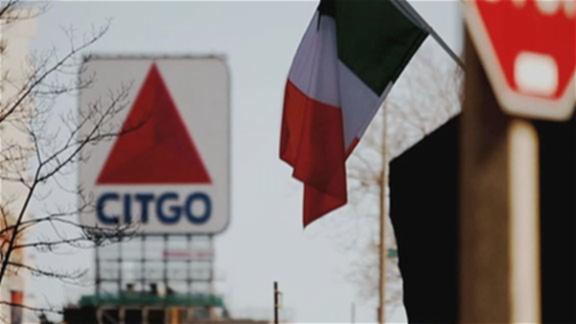
Citgo Sign: Landmark or Curse


Citgo Sign: Landmark or Curse

The Citgo Petroleum Corporation began in 1910 by Henry L. Doherty originally known as the Cities Services Company. A big sign was built a couple blocks away from Fenway Park at Kenmore Square in Boston Massachusetts. City services changed its name to CITGO. Thus, changing the sign to what today is known as the Citgo Sign. For the company the Citgo sign was just for advertisement but for Bostonians it became much more.

"See it go"


Foley, the famous electrician who began working on the sign in 1965 at the age of 20, has been the keeper of the sign ever since. He upgraded the sign in 2004 from neon to LEDs to save energy and keep the sign up to date. Foley, in an interview with the New York Times, said, ““I was only a kid when I started servicing it, and I’m still servicing it. It’s part of me.” Not only has it become a part of Foley, but it has become a part of the city’s culture. The sign has become important to the city and is now in tour guide brochures and post cards as a representation of the city. 


The sign originally became famous by its exposure through the Red Sox games. A tradition at Red Sox games is to chant “C-IT-GO” whenever a player hits a home run over the left field. The sign has become a symbol of good feeling for Red Sox fans all over the world. In 1980 the mayor of Boston, Edward J. King, wanted to turn off and tear down the sign as a symbol of energy conservation. By that time the sign had gain affection from all over the nation and the world. After many protest and the acknowledgement of its importance to the city, the mayor decided to pause the removal of the sign and turned it back on in 1983. No other sign has had such an impact or importance on a city since the famous Welcome to Fabulous Las Vegas sign which is well known all over the world and was declared a national landmark. Most Bostonians and Red Sox fans everywhere believe the sign should be a landmark while others have cynical views about the sign and wish to remove it. 


Signs of Time: Citgo and Hugo by Andres Orozco


Citgo was sold to the Venezuelan government in 1990 and to this day the connection between Hugo Chavez, the dictator of Venezuela, and the sign, angers many Americans. The sign for these Americans resembles a foreign dictatorship that should be tore down not be promoting Chavez. They see it as a constant reminder of a horrible dictator. This global political problem brings a lot of controversy to the city of Boston, but luckily for locals their only concern is the significance the sign symbolizes to the city of Boston and Red Sox fans. The sign has become part of the Boston culture and holds a big significance to Red Sox fans world wide.  


Friday, November 4, 2011

"Muslim cab drivers save Jewish bagel shop"

Here is a link to an NBC article I found to be relevant to our most recent course text, Lush Life. The story connects to the theme of coexistence in the city, which we have explored in recent discussions. It tells the story of two Muslim cab drivers who come together to save a kosher Jewish bagel shop which was started by a Polish immigrant in the 1920s.

Wednesday, October 12, 2011

Sports as a Symbol of their City


May I introduce to you the St. Louis Cardinals, the greatest baseball team in the MLB and the world.


However, it is not only this stellar team that led me to Busch Stadium in St. Louis, but the skyline that Busch proudly accentuates in the background. It provides a view of the Gateway Arch, the Old Courthouse, and buildings such as Met Life, AT&T and Bank of America that create a spectacular night time skyline visible for everyone to enjoy along with a baseball game. All of this is available for a relatively low price (unless you want a seat close up).


But before you understand the importance of the skyline in connection with the stadium, you must first understand why baseball (and all professional sports) became popular. The reason is pretty simple; the games were cheap and entertaining. As the 1800's came to an end the sprawling new cities created new patterns of recreation and leisure. The congestion and disease of city life led many people to seek participation in outdoor recreation. People sought places within the city to escape the tenements, factories and offices, so they turned to parks where others had set up croquet or tennis clubs.


Working poor could not afford to join a croquet club and did not have as much free time as the affluent, but they too wanted recreation, leisure and fellowship. They found this in gymnastics clubs, amusements parks, and spectator sports such as professional BASEBALL!

People from all social classes (mostly men) attended the games, with ethnic immigrants being among the most faithful fans. Cheering for their baseball and other sports teams, the rich upper class and the downtrodden lower working class found a common loyalty which gave a sense of belonging to uprooted people.

In short, the excitement of rooting for the home team united all fans. So not only were they getting inexpensive entertainment (and most of the time free as you can see in the picture above. Man, can you imagine the World Series being a
free game?), an escape from reality and a passion that they could pursue, but more importantly this all took place in an environment where they were equal to the upper class: their bosses -- the Rockefellers, the Mellons and the Carnegies.


When I went to watch the Cardinals, earlier this year, I noticed that outside the stadium tickets were being sold for a relatively good price that dropped as time went by. As we enjoyed the game, we naturally began socializing with the fans sitting around us and discussed our common interest: the Cardinals, hunting, etc. This was especially interesting when I realized that the the
family sitting behind me was an inner-city family and in front of me sat a family from an upper-middle class suburb. After the game, as I walked through the stadium, I ran into a mass of people from all different social standings, ethnicities, and (probably) financial statuses, the perfect example of
unintended social integration.


I was with my dad, and it was an extremely exciting and entertaining game. The Cardinals were trailing the entire game by two when the home-town hero, Albert Pujols, stepped up to the plate with two outs and drove in two runs to send the game into extra innings. All this entertainment for only $20!


As sports have grown up they have not only kept this connection with all social classes, but have grown even more intimate and essential to the city and the people, serving as symbols of their respective cities. It became quite clear to me the other night when the announcer of the game stated, "The city of St.Louis can sleep sound tonight," after the Cardinals beat the Phillies to tie the NLDS 2-2. This was just a sign that teams such as the Cardinals are not just economically tied into the life of the city, but emotionally and symbolically tied to it. When someone talks about a team, they always use the name of the city, for example: Tampa Bay beat Boston. The pride that people experience from a team winning is akin to nationalism -- people live and die by

their teams. One Chicago Cubs fan goes into this more deeply, "...to me, and to so many others, they [the Cubs] are more because they symbolize something greater: hope, loyalty, endurance, love, pride, tenacity, the strength to carry-on, the ability to keep a dream alive, and my city...
EVERYTHING that I hold near and dear to my heart, that makes me who I am, that signifies all that I believe in...."


In a recent Chrysler commercial (this link will bring you to YouTube) where they flash various symbols of the Detroit, (at 0:48) they show a man wearing the Detroit Tigers baseball shirt. It is just another example of how sports team are symbols of their cities.

Many stadiums are tied in with the city that they represent. The most recognizable symbol of St. Louis, the Gateway Arch, is emblazoned across the outfield (as seen in the picture to the right). In some cities the stadium is an integral part of downtown. I snapped this picture as our plane curved around downtown St. Louis. As you can see, Busch Stadium is a large part of the downtown with the Rams football stadium, the Edward D. Jones Dome, on the other

side. Similar to this, the Staples Center, home of the Laker, Clippers and Kings, is surrounded by downtown Los Angeles right off one of the main streets. These two stadiums, and many like them, became integral parts of their respective downtown landscapes. Their constant association with the city makes the people
feel that the teams represent the city.


One can see all of this (the social classes coming together and a team symbolizing of the city) in the article A Fan's Perspective: What the New York Yankees Mean to Me. He talks about how during 9/11 he felt as if the city rested on the weight of its sports teams. He remembers seeing the "Mayor of America," Rudy Giuliani sitting with the masses and cheering on his favorite team.


The picture of Busch Stadium, at the top of the post, offers more than just a scenic view. It is the perfect symbol of how a team can symbolize a city, can bring together all social classes and can give them all equal entertainment and common ground -- it is a symbol to the fans of all the city has to offer.


------------------------------------------------------------------------------------------


Now here is a cool
progression of the Cardinals' ballparks through the ages


------------------------------------------------------------------------------------------


Robinson Field in 1907 (1893-1920) (an amusement park used to stand right

outside the park)


Sportsman Park in 1920 (1920-1966)


Busch Stadium in 2005 (1966-2005)


New Stadium can be seen at top of the post.


Tuesday, October 4, 2011

The Laramie Project

The Laramie Project was written by Moises Kaufman and the members of Tectonic Theatre Project as an investigation of a brutal hate crime in the town of Laramie, Wyoming. This play is taken entirely from interviews of Laramie residents, and the journal entries of the Tectonic Theatre Project, and in this way, it gives a completely genuine and fascinating look at Laramie from the inside and from the outside. The way Tectonic views Laramie changes a lot throughout the course of the play. Beginning with the view of Laramie as your typical town, it morphs to become something just a little out of the ordinary. One of the first things Greg Pierotti notices about Laramie is the welcome sign. It reads: "WYOMING -- LIKE NO PLACE ON EARTH. Instead of WYOMING -- LIKE NO PLACE ELSE ON EARTH," (27). Similarly, Barbara Pitts notices that "in the dark, [they] could be on on any main drag in America -- fast food chains, gas stations. But as [they] drove into the downtown area by the railroad tracks, the buildings still looked like a turn-of-the-century Western town," (28). Greg even swears he "saw a heard of Buffalo," (27). To the Tectonic Theatre Project, Laramie is a tiny rural town that's just a bit off. This view is also shared by Stephen Mead Johnson, a representative of the Unitarian Church who first finds Laramie to consist only of a "tumbleweed" and a "cement factory," (36).

The next scene is an interview with Marge Murray and Allison Marge who really begin to show the depth that Laramie seems to hide. Marge, in particular goes from asking "Well, yeah, honey, why wear clothes," to describing the intricacies of Laramie's view on homophobia (28). Allison and Marge are such a fantastic example of how this play operates -- one second Allison is embarrassed to explain to Greg that "S. O. L." stands for "shit outta luck," and the next Marge quite eloquently sums up Laramie's class problems with the few sentences: "It's about the well educated and the ones that are not. And the educated don't understand why the ones that are not don't get educated," (29). Though both Marge and Allison seem like your typical comical country bumpkins, they both have a lot more to say about Laramie, Wyoming than anyone would expect. Marge ends this scene by frankly telling Greg that she's know more than she's telling him.

At the end of the play, Tectonic leaves the "sparkling lights of Laramie, Wyoming," with a completely different perspective on this tiny town (88).

Kaufman, Moises, and Leigh Fondakowski. The Laramie Project. New York: Dramatists Play Service, 2001. Print.