We've been waiting all our lives
for things we've always had but have no eyes to see.
Something new is going to happen,
The most natural thing but nothin' we'd expect.
All these buildings and mountains
slowly they'll arise
before our eyes.
How do cities understand?
We drink our wine and wonder why we're really here
What's the point of even asking?
You take the good and bad and make the best of it.
All these buildings and mountains
slowly they'll arise
before our eyes.
All these buildings and mountains
slowly they'll arise
before our eyes.
have you watched the cities move
does nature fall before this age of industry
for today I'll let it go
you've been good to me have I been good to you?
All these buildings and mountains
slowly they'll arise
before our eyes
All these buildings and mountains
slowly they'll arise
before our eyes
The song "Buildings and Mountains", by the Republic Tigers may seem like meaningless existentialism to some, but I want to explore an idea that they bring up: Is there a connection between the city and nature? In a black & white world, the answer is no, but when looking at the grey area they are in many ways connected in how they are defined. Just looking at the lyrics, in the chorus, they say that both buildings and mountains will arise; in the same way that nature grows and changes, sometimes shaped by humans, the cities develop in the same way. They ask "how do cities understand?" as though there is some connection between the city and its inhabitants, as though the city is made to be perfect and these flawed creatures live within it. It talks about cities moving and nature falling before it, but not in the form of a statement, but in a question. This brings up the question of is nature strong enough to resist the growth of this mechanized city, or does the city replace it all together. The Republic Tigers might be right that the city itself could be "the most natural thing, but nothin' we'd expect".
In many ways, the city does replace Nature. A passage in the nior novel, The Big Sleep, by Raymond Chandler, really brought my attention to this idea. The passage reads:

"It's beautiful." I pulled up beside a loading platform. We got out. I listened. The hum of traffic was a distant web of sound, like the buzzing of bees. The place was as lonely as a churchyard. Even after the rain, the tall eucalyptus trees still looked dusty. They always look dusty. A branch broken off by the wind had fallen over the edge of the sump and the flat leathery leaves dangled in the water.
Looking at this scene, it seems very desolate and that nature has been destroyed by the city that developed in novel, but I view it as more of a new kind of nature, what the Republic Tigers would say is the most natural thing, but nothing you would expect. The layer of dust that coats the trees acts like a haze that is spurs the evolution of the trees to last in the city, as though the layer of dust protects them from being destroyed by the city, but changes them so that they are now something less than a tree, and the leaves from it are now leathery as a means of adapting to the city. The bees that would be found in nature, carrying pollen for plants to grow and reproduce, are replaced by cars that carry cargo or people that allows for cities to grow and reproduce. The empty spaces that formerly belonged to nature are even now used for churches and people. The stereotypical view of the city is that it destroys nature to make room for the city, but this passage almost shows how the city doesn't destroy nature, but instead forces it to change with the city in order to survive.
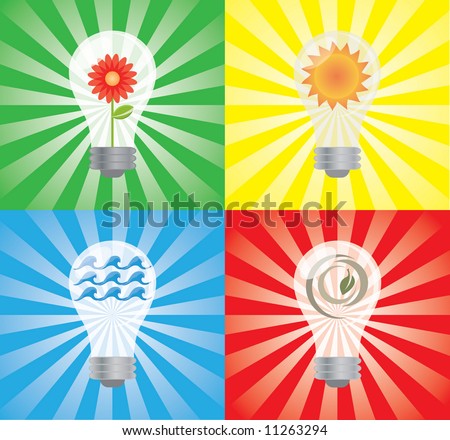 In more modern times, there have been efforts made in society to try and restore nature to its former glory before the city, within the city. This notion of making a city "green" simply by making it more energy efficient and using new forms of energy. The currently accepted "bad" non-sustainable energy sources are plants that use coal, nuclear, gas, or similar fuel sources; what is know as "good" sustainable energy sources are solar panels, wind turbines, or dams. So what society considers to be "green" energy sources are the sun, wind, and water. Ask any biologist what plants need to grow and survive and he'll most likely tell you, the sun, air, and water. So are these new buildings that claim to be "green" so far from plants themselves? If you think about the economic advantages of using sustainable energy sources, inside such large (non-residential) buildings, businesses develop and grow inside them, and not having to pay as much for energy over the long run can lead for more growth, maybe creating branches, spreading out. Just the phrase green energy makes people think of a city that can get all its energy through the same methods that energy is made in nature to in some ways make the city more like nature. City and nature are two contrasting things that are becoming more alike as they both try to grow and thus have to grow into the other.