Showing posts with label science fiction city. Show all posts

Thursday, November 10, 2011

Efficiency and Human Nature

Efficiency as defined by Wikipedia:
Efficiency in general describes the extent to which time or effort is well used for the intended task or purpose. It is often used with the specific purpose of relaying the capability of a specific application of effort to produce a specific outcome effectively with a minimum amount or quantity of waste, expense, or unnecessary effort.
     In the late 1800's, Frederick Winslow Taylor developed methods of labor productivity, one of many types of efficiency, called Taylorism. Taylorism was largely accepted by industries seeking to increase profits and reduce waste. Despite looking good initially, this "efficiency" also met a lot of criticism. In the early 1900's the Senate in fact banned Taylor's methods when an investigation found the majority of workers to be hostile towards the amount of control the managers had over them. Similarly, in Taylorism, workers with talent and potential were treated the same as unskilled workers creating a system that catered to drones, not humans. I find this historical context helpful because it is an example of how "efficiency" does not often work well with human nature.

     In Blade Runner, Ridley Scott shows us a world full of "efficiency". Technology has advanced far enough to enable street vendors to do DNA tests on synthetically manufactured snake scales and housing shortages are clearly no longer an issue. However despite such advances there are clearly major problems still plaguing the city and in fact the majority of people have fled off-world. In the world of Blade Runner, replicants have been created for the purpose of colonizing other planets. Such a feat by genetic designers, creating robots that are superior to the creators themselves, would be looked at by our society today as amazing and extremely beneficial. However, as seen by the goal of the Blade Runners which is to "retire" the replicants, these technological advances have gotten too far out of hand and the efficient city which we had been working towards for hundreds of years is no longer efficient for humans.

Saturday, October 15, 2011

The Imperfection of Perfection within Cities

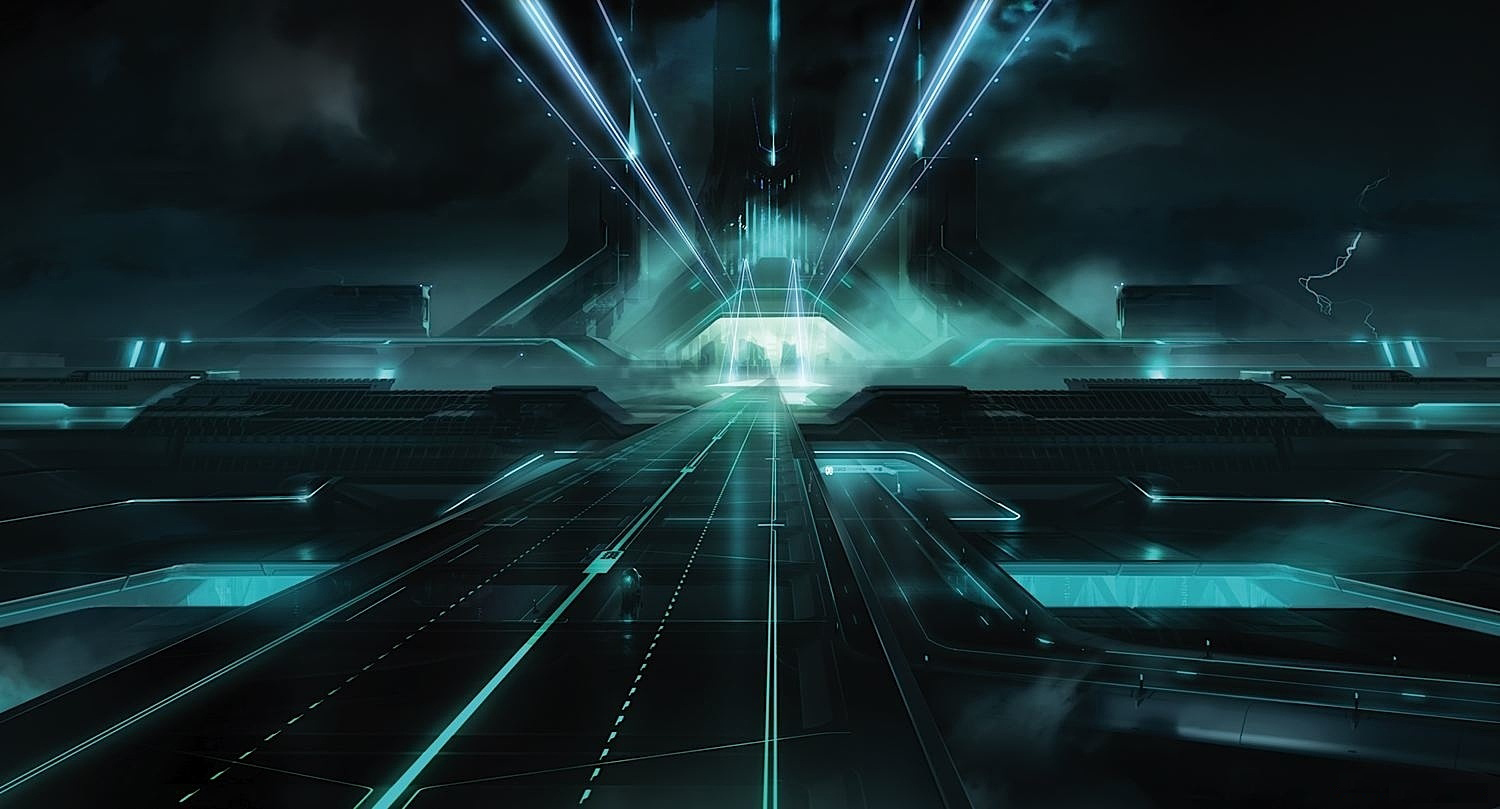
Tron Legacy is a science fiction film directed by Joseph Kosinski. The main characters of this movie are Jeff Bridges as Kevin Flynn and Clu, and Garret Hedlund as Sam (Kevin Flynn's son). Tron is a movie about Sam's journey into a virtual reality world that his father, Kevin Flynn created, called The Grid. After the disaperance of his father, Sam became the biggest share holder of his father's company, ENCOM. However, Sam was not interested in his father's company. One day, Alan Bradley, ENCOM's executive, approached Sam about a mysterious "page" that was sent from his father's computer from an old abandoned arcade. While investigating the arcade, Sam found a secret computer room, where he accidentally sent himself into the virtual reality world created by his father: The Grid.

While watching the movie, I noticed parallels and contrast between Tron city and the city in reality.

Compared to the authorities in the real city, the authorities in Tron city were much stricter. In the beginning of the movie, before Sam teleported himself to Tron city, he violated the law several times, but got away: speeding on the highway and breaking into his father's company. However, when Sam arrived at Tron city, he was viewed as a flaw within the system and was immediately captured. Authorities in Tron city seek out all flaws and imperfections in the city, in order to make it the perfect city, as his father had programmed it to be. Flawed “programs” (humans in Tron city) were either "rectified" or forced to play a game, a battle to the death. Corruption and violation of the laws in Tron city was strictly punished or corrected immediately. In contrast, in the real city, the human system is not as effective in dealing with crimes.

In addition, both cities represent modernization. In the real city, we see modernization from the old brick building of the arcade to the tall, glistering glass skyscraper of ENCOM. In the Grid, the city of Tron is located in a middle of nowhere, surrounded by the barren, rocky terrain. The contrast between the structured and lighted city of Tron to the bare and wild terrain that surrounds the city, emphasizes how modernization of a city creates a boundary between humans and nature. The motor bikes used to travel around Tron city, could not be used in the rocky terrain. Compared to the arcade, the ENCOM building was much more sophisticated and technologically advanced. Similarly, Tron city is a technologically advanced city, but it separates itself from the natural world.Finally, this movie wrestles with the idea of the “perfect” city and the corruption of technology. Technological advances and development has always been seen as beneficial to human needs. However, in Tron Legacy, Kevin Flynn attempted to use technology to create the perfect world for humans to live in. He created Clu, and programmed him to help create the “perfect” world. However, Clu saw human qualities as an imperfection that needed to be destroyed. This shows how technology can be useful and beneficial, but we should not depend on technology to do human responsibilities.


Saturday, October 8, 2011

Brazil: Where hearts were entertaining June


Brazil,” by Terry Gilliam, is a 1985 science fiction noir film about the dystopian society of the future. The film follows the story of Sam Lowry, a government employee working at the Department of Records, a massive government bureaucratic organization that keeps records and track of all individuals in the "Brazil" society. The story revolves around the character Archibald Harry Buttle, who is mistaken as the terrorist engineer Archibald Harry Tuttle (played by Robert De Niro) and killed in custody. Jill Layton, a neighbor of Mr. Tuttle, tries to report this mistake to the Office of Information Retrieval (which is highly reminiscent of the Gestapo from both their uniform and tactics), but is instead marked as a terrorist herself for insisting the government made a mistake. Sam Lowry becomes obsessed about this woman because he keeps seeing her in his dreams, and as such he finally accepts a promotion to “The Department of Information Retrieval ” in order to get her classified information as well as clear the charges against her. However, Sam Lowry gets detained due to abusing his power, and is tortured at the end of the movie. The movie ends with him going crazy during torture and imagining that he escaped and lived a happier and simpler life in the countryside.

Although this film is primarily a critique of bureaucracy, the film also gives us a unique perspective on how the physical features of city actually reflect both the levels of corruption and inefficiency within a society. Near the beginning of the story, Sam Lowry goes to a fancy restaurant with his mother, and one of the noticeable features in the restaurant is the number of unsightly ventilation tubes snaking above the tables (as seen below).

Later in the movie, Tuttle explains that only the Central Services are allowed to work on ventilating systems, and as such the sloppy ventilating system visible in the restaurant is the work of Central Service Employees. This brings up an important idea that looking at a the physical characteristics of a city, especially the parts that the government runs, one can actually tell the efficiency of the government and the society as a whole. Thus, Just looking at the restaurant, one can already see the visible levels of bureaucratic and inefficient that plague the government. Another example of how the physical features of a city reflect its efficiency is shown when Sam goes to Jill’s apartment building. The camera first shows a propaganda poster, and the camera pans out after this shot to show a dirty and impoverished community, a reflection of the government’s inefficiency and the inequality rampant in the society(something which the masses are visibly displeased about, as shown in the pictures below).

Notice what is written over the H in Happiness on the picture below:

Notice the change as the camera shot above pans to the shot below:


The idea of using physical features to understand city works not only with the cities of “Brazil” but also with actual cities. For example when you look at a street in Austin, you can tell the presence the local government has in an area by observing subtle features like trash bins or street cleanliness (aka does the city of Austin Garbage Department regularly come by?) to more overt features like the nearness of police stations. Terry Gilliam uses these same techniques and features in his movie “Brazil,” albeit on grander scale than one would find in the real world.


Monday, September 26, 2011

Smart Cities v. Jaywalking


There was an interesting article in the NYTimes this weekend about "Not-So-Smart Cities" that I thought relevant to the class. The author was responding to an experiment in New Mexico in which a company is building a city populated entirely by robots in order to test out new technologies for running cities more efficiently. This project is part of what is called a movement in urban planning focused on designing and constructing "smarter cities." You might have seen IBM commercials about "building a smarter planet":


In fact, IBM has a series of infomercials about building "The Smarter City" specifically.


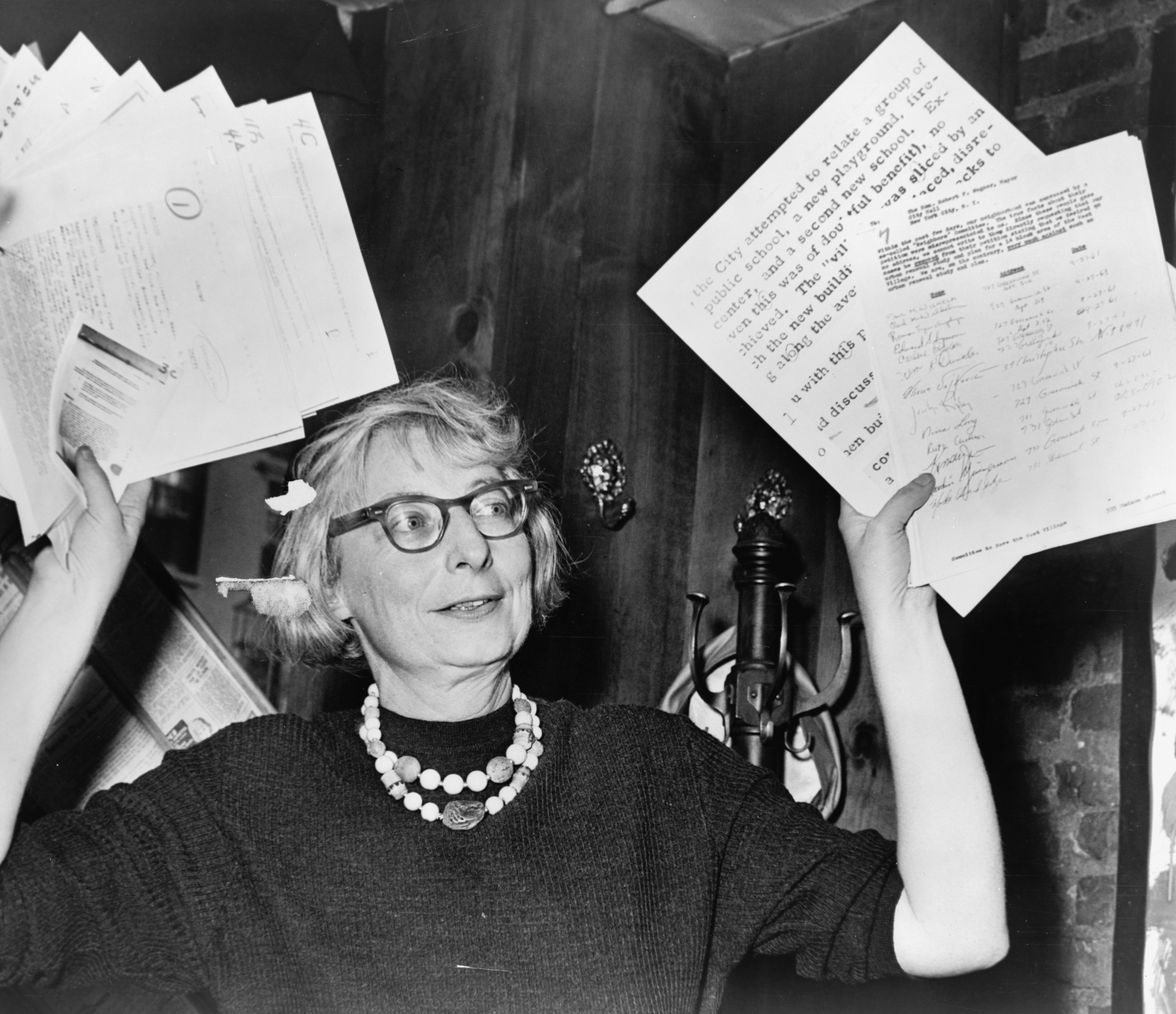
The argument for smarter cities is well summarized by the author of the NYTimes piece, "that armed with enough data and computing muscle, we can translate cities' complexity into algorithms" and thus create a more efficient system for living. The basic argument of the NYTimes opinion article, though, is that a city governed by machines will always be inherently flawed, since humans are more dynamic and will never be entirely predictable. The author invokes the urban activist Jane Jacobs to make his argument.


Jane Jacobs's famous battle with Robert Moses over the Lower Manhattan Expressway is worth retelling here, as it pits two ideas of the "city" against each other. Moses was an urban planner and was the prime mover in the development of modern-day New York, responsible for a number of major bridges and expressways in and around the city. He certainly represents an early proponent of the "smart city" model, prioritizing efficiency of movement throughout the city above all else. His most famous projects were expressways.

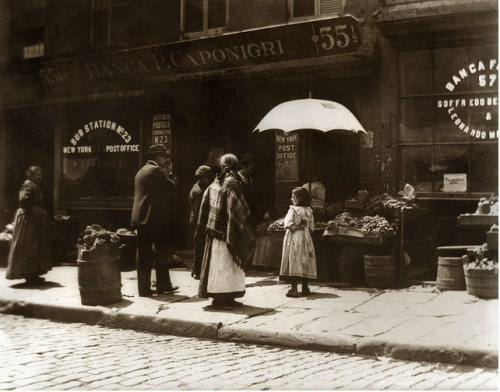
Jane Jacobs was a community activist. She most famously fought against Robert Moses's proposed plan for the Lower Manhattan Expressway that would have destroyed a large part of the historic immigrant neighborhood of Little Italy. (This is where Jacob Riis took many of his photographs of tenement life on the Lower East Side.) Many families and businesses would have been displaced by the construction of the expressway. For Jacobs, the chaotic and beautiful life of the sidewalks in such neighborhoods was the heart of the city.


Monday, September 12, 2011

Re: Invisible Cities


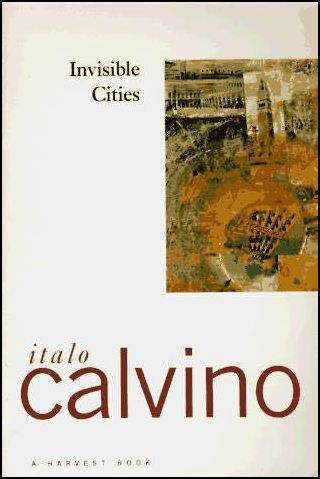
One of the book being read by the class is Invisible Cities by an Italian writer, Italo Calvino. The style of the writing is very beautiful and poetic of these fantastical cities which inspire much awe and wonder in the narrator. As he says in his book "When Polo began to talk about how life must be in those places... words failed him". I was very moved by these descriptions, and so I wish to attempt to create my own city in the same style of writing. I recommend reading the book to anyone who has an active imagination with an analytical eye, and please feel free to give feedback on my interpretation of the writing. Readings from the book are available here.


Cities and Desire


Along the coast there is there is the city of Jerdeania, a place you would not believe was real until you saw the two islands that seem to have just rose out of the ocean. The city may have been build many years ago, but the ocean has since destroyed the land it had been built on. From these great uplifts of land you see buildings built on cliffs held together by the metal pipes, as metal roots for the growing building keeping the city stable. The city seems to have been growing up for years now. The two sides of the city are similar, so obviously started by the same people, yet they are separated by this great canyon nature has created between them. The city to the north seems to be populated by the most beautiful and desirable women in the world that seem content living their lives within the isolation that the island provides. The island more to the south is inhabited by men who seem pleased to be going about their daily tasks absent of the diverse humanity waiting in the outside world. These men and women are separated by the waves of the violent ocean swirling under the foundation which they live on and by, seemingly ignorant to anything not on the cliff city.
As the tide lowers with the sun, there is a sense of restlessness that develops within the citizens of Jerdeania, and almost by magic the eyes of a man and woman lock across the great canyon that separates them. There is an animistic instinct that breaks through and the couple knows to that the new calm waters are the conditions of the transaction that is between them. Before their minds can catch up, their bodies are naked and falling down to the salty foam that welcomes them. This spreads through the city like a disease until all the buildings are abandoned with piles of useless clothing to the blissful populous now playing gayly in the water naturally with genders different from their own. The beautiful nudity seems a new experience for the citizens and enjoy the compatibility that they have now discovered with the sun disappearing into the water. Yet with the green flash of the vanished sun, the passion is gone, the mind takes over once again and the naked bodies must separate and climb up the cliffs from which they had fallen and contentment returns to the citizens of Jerdeania. As the ocean becomes once again relentless, the people must once again separate, until the next calming of the waters. A city built against nature must become one with it.

Tuesday, August 23, 2011

3 Dreams of Black: WebGL and the Urban Frontier

The latest WebGL video, written and directed by Chris Milk, for the song "Black" by Danger Mouse, Danielle Luppi, and Norah Jones, was produced in partnership with a team of Google designers. It is a stunning digital statement about the apocalyptic decline of American civilization in the twenty-first century. For the creators, it seems, both the iconic spaces of the city and the country in US history will be displaced by a virtual fantasy somewhere in between.

(You can watch a screen grab below, but for the full experience, download Google Chrome and visit the official website--the innovative technological form is an integral part of the film.)


First, a brief narrative summary--the majority of the narrative is composed of POV shots:

"Three Dreams of Black" opens with a video Cutlass Supreme speeding down a freeway, passing under ruined entrance ramps, overgrown with vines, and entering an equally ruined city. After camping out for a night in an abandoned apartment, the survivor (the viewer) drives further into the post-apocalyptic city, this time presented in 2D. Soon, though, the scene begins shape-shifting with colorful explosions of 3D life growing like cancers on the dull grey of the dead city's streets.
"Until you travel to that place you can't come back
Where the last painting's gone and all that's left is black"
In time with the second verse of Norah Jones's lyrics, we travel to a 2D version of the Wild West, riding this time on a train and looking out over a digitized frontier through the window created by the door. [255] A herd of buffalo pass by, but they quickly begin morphing into 3D grotesqueries. "We" climb atop the train as it travels through more rolling terrain of the West, and over what appears to be a oil spill in process, the same 3D grotesqueries quickly ravishing the countryside.
"At last those coming came and they never looked back
With blinding stars in their eyes, but all they saw was black"
The final scene of the film, the third dream, is an entirely 3D desert landscape, similar to the classic settings of spaghetti westerns--the "Rome" album is a tribute to the soundtracks of those old movies with a 21st century updating. This fully digitized scene announces itself as an artificially-engineered one, punctuated by the advertising and video iconography that populate the terrain. This time we follow a flock of birds into the final fade to black.
"And when you follow through and wind up on your back
Looking at up those stars in the sky, those white clouds have turned it black"

Norah Jones's elliptical lyrics provide us little insight into how the world ends, except that it is some vaguely Biblical punishment for the sins of humanity ("it was heaven sent," "punish my deeds"). There is further moral ambiguity in the meaning of the 3D interruptions throughout the video that appear to both deconstruct and reconstruct the early country and city scenes. On the frontier, the oil slick clearly represents topical and historical environmental catastrophe. The buffalo morph into the spill, linking 19th century and 20th century ecological degradation. Yet on the urban frontier, the 3D images embody nature reclaiming the fallen city in the form of explosions of green turf and galloping wild game. The third and final landscape, entirely in 3D, is presented as a utopian landscape of infinite play. Like the cowboys of the Wild West, we are free to romp at will among the rock outcroppings and video game characters. Digital technology--the cutting edge wave of which we are experiencing as the form of the film itself--is at once the cause and salvation of the end of the world as we know it.


Through WebGL technology, the user watching the film can manipulate the frame by moving the mouse around the screen. This effect enhances the narrative experience of the POV shots--moving the mouse is the equivalent of turning your head around as you drive through the ruined city of the future. Clearly, this an empowering perspective, especially given the decayed world in which the story us set. We might not have been able to stop whatever apocalyptic events happened, but we are now free to look around as much as we want. In the third and final setting, our manipulation of the screen is at its most potent and versatile. There, we can nearly turn the perspective 360 degrees and explore and direct the movement of the camera itself, approaching whatever strange objects on the horizon are of interest. In this way, the final scenes of the video can be different every time you watch it. It seems the argument is that it is in this artificially-realized terrain that we are emancipated from the failures of earlier historical epochs and landscapes. The city and the country have passed, web 2.0 is our final resting place.

(Here is a video about the making of the film:)