Monday, September 26, 2011

Smart Cities v. Jaywalking


There was an interesting article in the NYTimes this weekend about "Not-So-Smart Cities" that I thought relevant to the class. The author was responding to an experiment in New Mexico in which a company is building a city populated entirely by robots in order to test out new technologies for running cities more efficiently. This project is part of what is called a movement in urban planning focused on designing and constructing "smarter cities." You might have seen IBM commercials about "building a smarter planet":


In fact, IBM has a series of infomercials about building "The Smarter City" specifically.


The argument for smarter cities is well summarized by the author of the NYTimes piece, "that armed with enough data and computing muscle, we can translate cities' complexity into algorithms" and thus create a more efficient system for living. The basic argument of the NYTimes opinion article, though, is that a city governed by machines will always be inherently flawed, since humans are more dynamic and will never be entirely predictable. The author invokes the urban activist Jane Jacobs to make his argument.



Jane Jacobs's famous battle with Robert Moses over the Lower Manhattan Expressway is worth retelling here, as it pits two ideas of the "city" against each other. Moses was an urban planner and was the prime mover in the development of modern-day New York, responsible for a number of major bridges and expressways in and around the city. He certainly represents an early proponent of the "smart city" model, prioritizing efficiency of movement throughout the city above all else. His most famous projects were expressways.

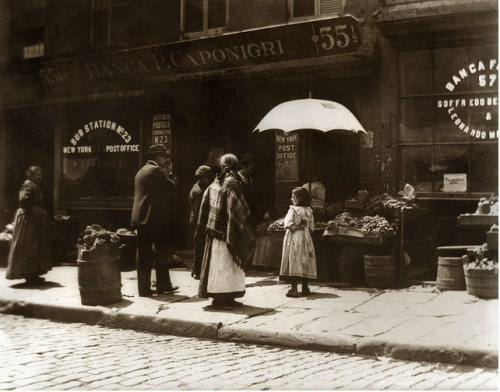
Jane Jacobs was a community activist. She most famously fought against Robert Moses's proposed plan for the Lower Manhattan Expressway that would have destroyed a large part of the historic immigrant neighborhood of Little Italy. (This is where Jacob Riis took many of his photographs of tenement life on the Lower East Side.) Many families and businesses would have been displaced by the construction of the expressway. For Jacobs, the chaotic and beautiful life of the sidewalks in such neighborhoods was the heart of the city.



Sunday, September 25, 2011

London (Bridge) is Falling Down


Most people are familiar with the song called "Our House" by Madness as a happy goofy pop song from the early 1980s. And it is. But, a lot of the music that came out of England from that period was more critical of London and the British Government. Songs from groups like the Clash, The Jam, and even the Sex Pistols, better illustrate the unrest and dissatisfaction among England's working class. These songs identify many of the conditions that made young people in London and other cities in England feel so alienated.

In the 1970s, England like many other countries, including the US, experienced a recession. Unemployment, inflation, and prices were high, which especially affected middle and lower class workers. Whole sections of London had become run down and even abandoned. An influx of immigrants from former British colonies, such as India and Pakistan, added to racial tensions. The general feeling in London was that England's best days were behind her and that she had little to offer younger generations.

In "London Calling," the Clash mentions that "Phoney Beatlemania has bitten the dust," meaning that the pride England might have felt about the Beatles can no longer cover up the country's real problems. The song lists some of these problems as clashes between police and youth, the decline of manufacturing jobs, drugs, and the fear of nuclear war. The singer's refrain that "I have no fear/'Cause London is drowning, and I live by the river" is an ironic acknowledgement of how few options existed for many young people in London in the 1970s and 1980s.


Saturday, September 24, 2011

Home Town

On Adele's official blog site, she quotes " ‘Hometown Glory’ – a stunningly evocative picture of “all my fondest memories of London”." She wrote the song "Hometown Glory in about 10 minutes after her mother tried to get her to leave London for a "university." Adele had been born and raised in London to a single teenage mother, and started singing at the age of four. At age 11, she and her mother moved to West Norwood (south London) which is the setting for the song "Hometown Glory."


Although we have seen that the city can have hidden secrets of poverty, I see Adele portray the city in a positive view, where dreams are discovered and memories are made. In her first stanza, she mentions that she is "aint lost, just wandering" means to say that she does not follow the stereo type of walking the same path everyday to work and fitting inside of her status in society. People my judge her and ask if she needs help finding her way back, as we see when she says, "is there anything i can do for you dear? is there anyone I can call?" Adele is not lost, she is striving to become something great and is seeing what is like to live the life of someone who is successful in the city.
After seeing the "wonders of [her] world" it fascinates Adele to see all of the different kinds of people in the city because "two worlds collide". Adele sates that even though "you get the people and the government [where] everybody [is] taking different sides" at the end of the day, the city is united. She is proud of where she is from.

I've been walking in the same way as I did
And missing out the cracks in the pavement
And tutting my heel and strutting my feet
"Is there anything I can do for you dear? Is there anyone I could call?
No, and thank you, please madam, I ain't lost, just wandering"

Round my hometown, memories are fresh
Round my hometown, ooh, the people I've met

Are the wonders of my world, are the wonders of my world
Are the wonders of this world, are the wonders and now

I like it in the city when the air is so thick and opaque
I love it to see everybody in short skirts, shorts and shades
I like it in the city when two worlds collide
You get the people and the government
Everybody taking different sides

Shows that we ain't gonna stand shit
Shows that we are united
Shows that we ain't gonna take it
Shows that we ain't gonna stand shit
Shows that we are united

Round my hometown, memories are fresh
Round my hometown, ooh, the people I've met

Are the wonders of my world, are the wonders of my world
Ar
e the wonders of this world, are the wonders of my world
Of my world, yeah, of my world, of my world, yeah


[- From :http://www.elyrics.net/read/a/adele-lyrics/hometown-glory-lyrics.html -]
http://www.adele.tv/biography/

http://en.wikipedia.org/wiki/Adele_%28singer%29#2006.E2.80.9308:_Career_beginnings